A lot of businesses have a website but still struggle to get enquiries. The issue usually isn’t whether they have a website - it’s how that website is working (or not working) behind the scenes.
Here are five of the most common website mistakes we see - especially with small businesses - and what to do instead.
1. A Beautiful Website… With No SEO
This is by far the most common issue. A website can look great visually, but if it’s not optimised for search engines, it simply won’t be found.
The problem:
- No keyword targeting (e.g. “web design Kendal”, “builder Cumbria”)
- Missing page structure (headings, meta titles, etc.)
- No local SEO (e.g. Kendal, Cumbria)
- A lack of content (few pages, no blog)
The result: low visibility on Google, minimal traffic, and few (if any) enquiries.

What to do instead:
Build your website around what people are actually searching for. This means researching relevant keywords and using them naturally throughout your pages - without overdoing it.
- Create dedicated pages for specific services or keywords so pages don’t compete with each other
- Include location-based keywords to capture local searches
- Consider location landing pages (e.g. Web Design Kendal, Web Design Windermere) - but ensure each page has genuinely unique content
- Structure content properly using H1, H2, H3 headings (only one H1, clear hierarchy and no skipping levels)
- Add consistent, valuable content (e.g. blog posts) to demonstrate expertise
A website shouldn’t just look good, it also needs to generate visitors. The above tips are just some areas which help get started with SEO. An expert can help to further optimise your website to improve your rankings.
2. Too Much Text (And No Clear Structure)
Some websites try to say everything at once - long paragraphs, no spacing and no clear flow. This makes it hard to scan for users, meaning they lose engagement and the key message ends up getting buried - not ideal!
Remember: most people don’t read websites - they scan them.
The problem:
- Walls of text
- No visual structure
- Key messages get lost
What to do instead:
Start by defining the key message of each page, then structure content around it.
- Break content into clear sections
- Use descriptive headings
- Keep paragraphs short and focused
- Use bullet points to highlight key information
Think of your website like a conversation - guide the user step by step, rather than overwhelming them all at once.
3. No Clear Call-to-Action
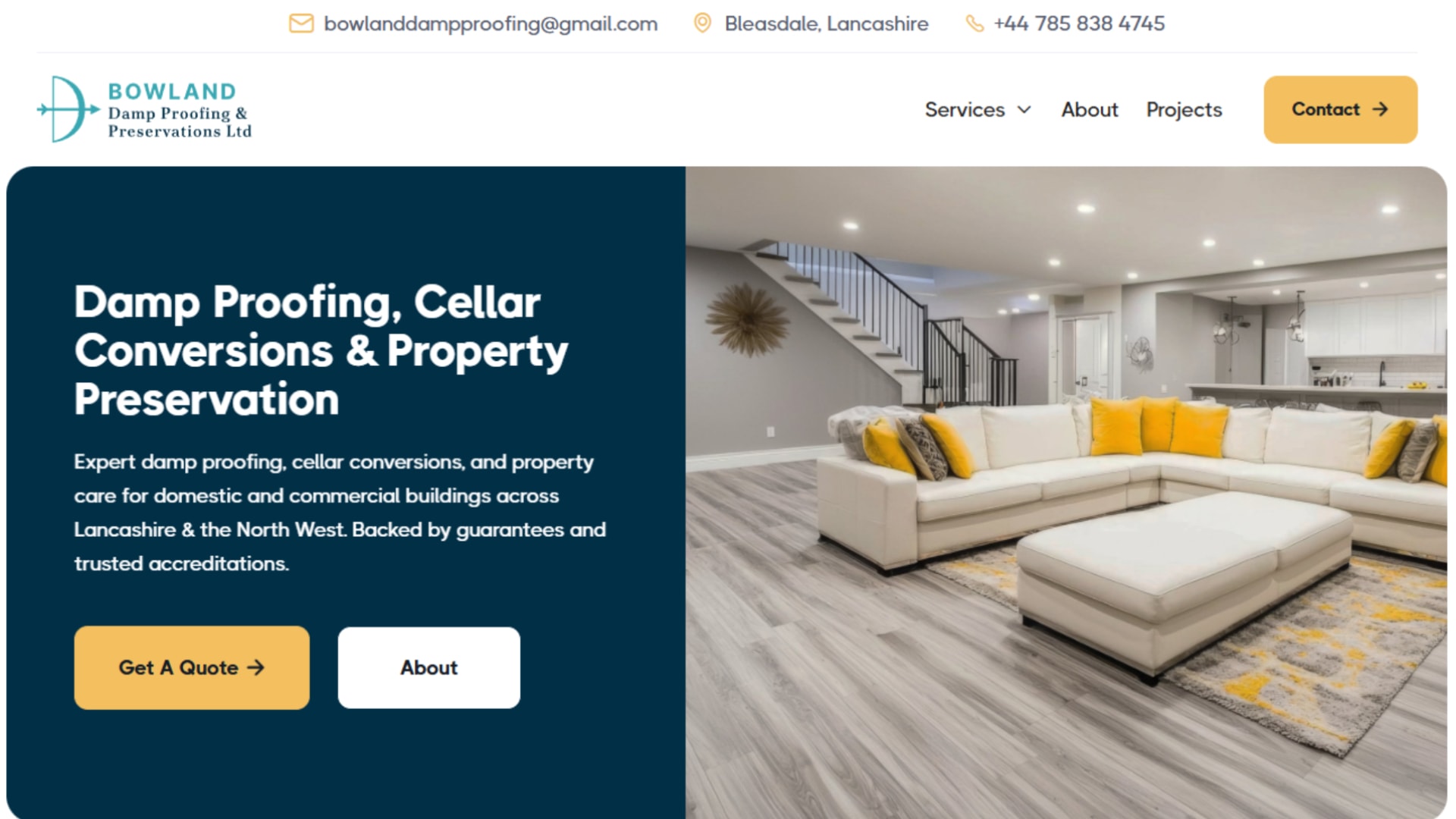
A surprising number of websites don’t actually tell users what to do next. Even if someone is interested, they may leave simply because there’s no clear next step.
The problem:
- No “Get a Quote” or “Contact Us” prompts
- Buttons are hard to find
- No clear user journey
Even if someone is interested, they may not take the next step.
What to do instead:
Every page should guide the user towards an action.
- Add clear CTAs throughout the page
- Use simple, direct language (e.g. Get a Quote, Book a Call)
- Place them strategically (top, middle, and bottom of pages)
Also ensure your site structure supports a natural journey:
Home → Service Page → Contact
If users have to think about what to do next, they usually won’t do anything.
4. Slow Loading Speeds
Speed has a direct impact on both user experience and SEO; if a website takes too long to load, users often leave within seconds.
The problem:
- Large unoptimised images
- Poor hosting or outdated builds
- Too many unnecessary scripts

What to do instead:
- Optimise images (size, format, compression)
- Use a modern, well-optimised build (especially important with custom setups like Next.js)
- Keep your site lightweight — avoid unnecessary plugins or scripts
Remember: a faster website = better user experience + better SEO
5. Not Optimised for Mobile
More than half of website traffic now comes from mobile devices, yet many websites still feel like they were designed only for desktop.
The problem:
- Text too small
- Buttons hard to click
- Layouts breaking on smaller screens
What to do instead:
- Design mobile-first
- Test on real devices
- Keep layouts simple and usable
If your site doesn’t work well on mobile, you’re potentially losing the majority of your visitors.
Final Thoughts
The good news is that most website issues aren’t complex and can be fixed relatively easily — often, small changes can lead to significant improvements. By focusing on visibility (SEO), clarity, usability, and clear calls-to-action, you can turn your website into something that actively drives results, rather than simply existing online.
Need a Second Opinion on Your Website?
We regularly review websites for businesses helping identify what’s working and what’s holding them back. If you’d like a fresh perspective, feel free to get in touch.
Related Posts

Get in touch - we're happy to chat.